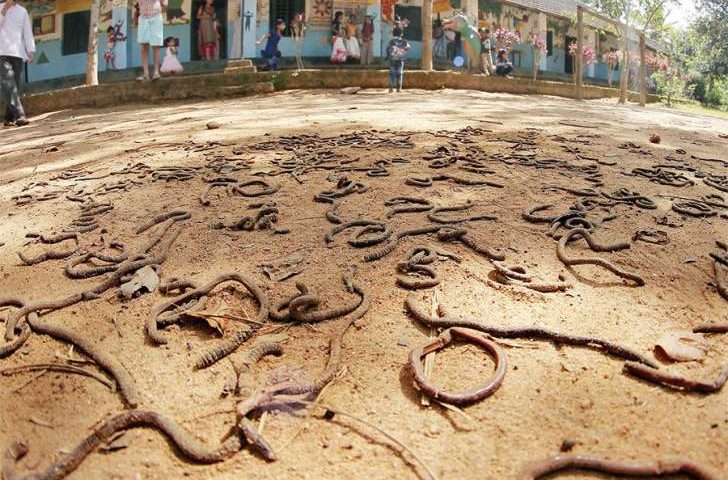
New disaster hits Kerala: After floods and epidemic, dying earthworms
Mass earthworm deaths have been reported in Kerala. This has been found to happen primarily in the districts. of Wayanad and Idukki. What are the results and perceived future of this new disaster of dying earthworms?
Mostly earthworms emerge after heavy rainfalls. But Kerala’s Wayanad district has been mostly dry since the flood waters receded. Mass earthworm deaths have also been reported in many parts of the Idukki district. The earthworms maintain the soil fertility. Thus, this mass genocide has left scientists and the state government initially baffled and now worried.
The last time such an incident of mass dying earthworms occurred in Waynad was back in the summer of 2016. It occurred due to high soil temperatures. This year too, after the rains, there has been a sudden upward spike in the temperature. It went up from 22 degrees Celcius on 21st August to 29.4 degrees Celcius on 13th September. Indian earthworms generally have a tolerance of about 15-22 degrees. Earthworm deaths could seriously harm the agricultural front of the state.
Changes in the soil conditions could also be a contributing factor. Generally, soil contains organic matter which allows it to retain water. The recent floods flushed out most of the organic matter in the soil, leading it to lose its water-holding capacity. Now, drier soil heats up faster. This heating effect might have caused the mass earthworm deaths.
Then again, S Prasanth Narayan from the Mahatma Gandhi University stated that the earthworms at Waynad and Idukki were different and the causes of their deaths were also different. But both the cases were connected to the floodings.
Kerala has a hard time ahead of it. The soil fertility will be adversely affected due to a large number of dying earthworms. It feels as if the state has been targeted one disaster after another.